


The treatment of inflammatory prostate pathology must be comprehensive.In addition to drug therapy, physiotherapy and nutritional therapy, it is recommended to perform special exercises for prostatitis.Regular exercise will help you recover faster and is also a good preventive measure against relapses of the disease in the future.We tell you how therapeutic exercises for prostatitis are performed and the video at the end of the article will help the man to perform the physical exercises correctly.
The benefits of physical activity for prostatitis
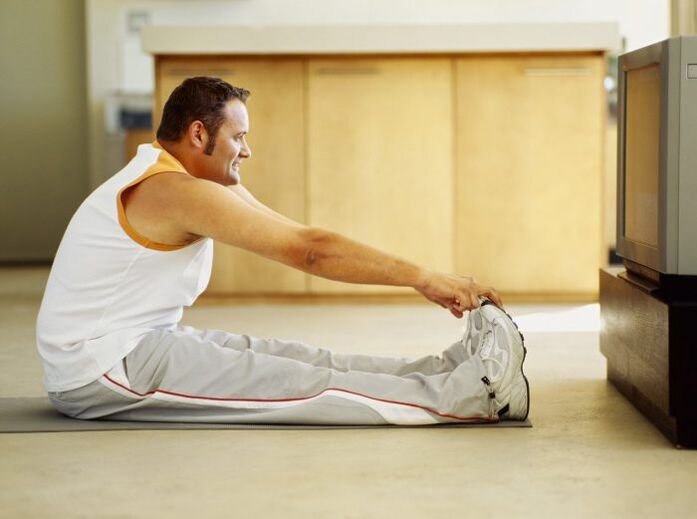
Chronic prostatitis is characterized by stagnant processes in the pelvic area.Due to the deterioration of blood circulation, preconditions arise for the proliferation of pathogenic microorganisms and inflammation of the prostate.In addition, due to the deterioration of blood flow to the prostate, the organ receives less oxygen, which also contributes to failures in its functioning.
Gymnastics for prostatitis will help improve blood supply to the male gland.As a result, the swelling of the organ will decrease significantly.Regular exercise increases muscle tone, which promotes blood flow and accelerates metabolic processes.
Important!A series of exercises for prostatitis is not the only treatment.Gymnastics is considered an addition to the main therapy.
Types of exercises and procedures for the prevention and treatment of prostatitis.
A man can use the following physical exercises for prostatitis:
- physiotherapy;
- yoga;
- Kegel exercises;
- Qigong exercises.
A good addition to any physiotherapy complex will be a perineal massage and contrasting water treatments for this area.The video at the end of the article will help you understand how to do exercises for prostatitis correctly.
Qigong
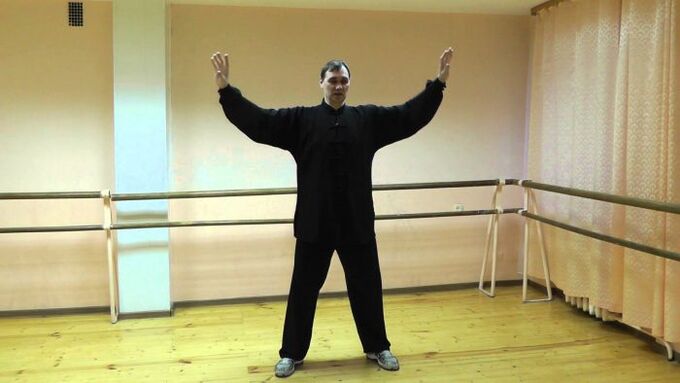
Exercises for male prostatitis are found in ancient Chinese Qigong gymnastics.They help improve blood circulation in the prostate and improve the functioning of the organs in the pelvic area:
- Sitting in the lotus position, begin to rotate on your pelvic bones from side to side.The back is straight and the palms of the hands rest on the knees.The amplitude increases gradually, but until it is possible to maintain balance.
- In a standing position, your hands are on your belt and both legs are shoulder-width apart.The posture is as relaxed as possible.Perform rotation movements with the pelvis in different directions.Watch your breathing: it should be even.The back is straight.
- In a standing position, legs together, palms on the right knee.Gently lift your right leg as you inhale.Stay in the raised leg position for as long as possible.As you exhale, gradually lower your leg.Repeat the same steps with your left leg.After this, do the same exercise, but move your legs away from your body.
- Sit on the floor, back straight and feet resting on top of each other.Bend your knees so that your heels touch your groin.As you inhale, raise your knees (like the flapping of a bird's wings).But it is not necessary to connect them.As you exhale, lower your knees, but do not touch them to the floor.Repeat the exercise five times: as you inhale, raise your knees, exhale and lower yourself down.
Yoga
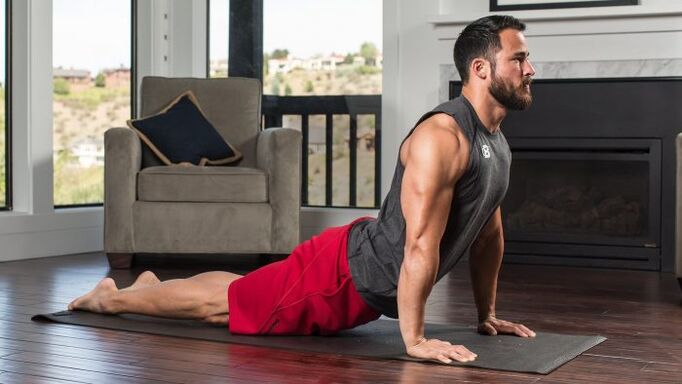
Yoga techniques also help eliminate congestion in the pelvis and improve blood supply to the prostate:
- to unload the venous plexuses, it is useful to perform inverted asanas (sirshasana, viparitakarani mudra, halasana);
- improve the outflow of venous blood from the small pelvis by moving the abdominal muscles (during this, negative pressure arises in the chest area and abdominal cavity, which improves the outflow of blood to the heart), for this purpose it is useful to do dhauti, agnisara, nauli exercises;
- All asanas involving the hip joints activate the vascular and nervous system in the prostate area, and also have a positive effect on the functioning of the organs in the pelvic area (baddha-konasana, sukshma-vyayama, etc.).
Kegel complex
To understand how to properly do Dr. Kegel exercises at home, you should try to hold back the flow of urine when urinating.This tightens the muscles in the prostate area.They are the ones a man needs to train.This training will improve blood circulation in the organ.
The essence of the method is as follows:
- Having remembered which muscles are tense during urinary retention, the man should similarly train them outside the process of emptying the bladder.
- It is recommended to perform approximately 30 contractions for each approach.If at first a person feels discomfort when performing the exercises, they are divided into five series of six compressions each.
- As the muscles become more trained, the frequency of compressions gradually increases up to one hundred.
Another Kegel complex consists of tensing and relaxing the muscles in the anal area.The advantage of these exercises is that they are easy to do anywhere (at work, in transportation), since others cannot see anything.During the day it is advisable to perform up to three approaches of 20 compressions each.Training the muscles of the anus is useful for the prevention of prostatitis.
Important!A man will notice the first improvement after two weeks of regular Kegel exercises.
therapeutic exercise
Physiotherapy for prostatitis necessarily includes a wide range of physiotherapy exercises:
- From a standing position, perform squats slowly, but not completely (knees are bent).During a squat, the knees are directed in different directions.
- Stand straight with your feet together.Without bending your back, raise each knee as high as possible.
- Squat halfway and lean forward, then slowly straighten up and extend your arms to the sides.At the same time, one leg is moved to the side.For each leg, the exercise is repeated 9 times.
- While lying or sitting, squeeze the ball between your knees.Hold the compressed position for 7 seconds.Then relax your legs completely.
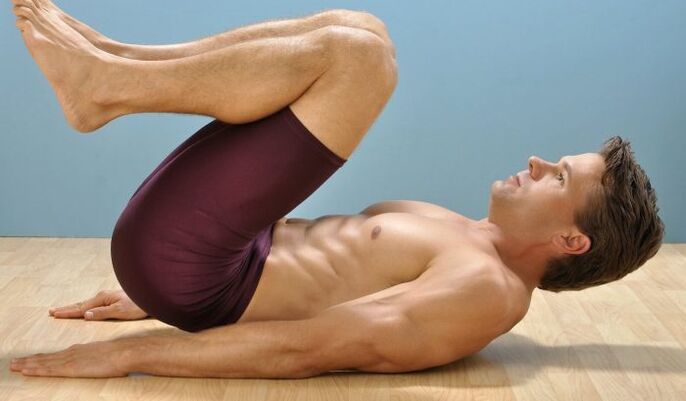
- Lying on your back, do the "bicycle" exercise - these are rotational movements with your legs bent at the knees.
It is also useful to make a "birch".From a lying position, raise your legs and support your lower back with your hands.Remain in this position for a quarter of a minute.